
اپلیکیشن اندرویدی فلشکارت آموزشی زبان انگلیسی برای مهندسان در درک و تحلیل سیستمهای توزیع شده با قابلیت تحمل خطا برای کاربردهای حساس و بلادرنگ
🎓 دوره آموزشی جامع
📚 اطلاعات دوره
عنوان دوره: دوره زبان انگلیسی برای مهندسان در درک و تحلیل سیستمهای توزیع شده با قابلیت تحمل خطا برای کاربردهای حساس و بلادرنگ
موضوع کلی: آموزش زبانهای خارجی
موضوع میانی: زبان در حوزه مهندسی
📋 سرفصلهای دوره
- 1. Introduction to Technical English Vocabulary
- 2. Understanding Definitions in Engineering Contexts
- 3. Using the Passive Voice for System Descriptions
- 4. Describing Components and Their Functions
- 5. Comparing and Contrasting Technical Specifications
- 6. Expressing Cause and Effect Relationships
- 7. Understanding Instructions and Procedures in Manuals
- 8. Common Prefixes, Suffixes, and Root Words
- 9. Quantifiers, Units, and Measurements in Engineering
- 10. Interpreting Data and Trends in Graphs
- 11. Decoding Acronyms and Abbreviations
- 12. Formulating Clarifying Questions for Technical Texts
- 13. Reading and Analyzing Diagrams and Flowcharts
- 14. Understanding Warning and Safety Information
- 15. Summarizing Short Technical Paragraphs
- 16. Introduction to "System" and "Distributed System" Vocabulary
- 17. Describing Nodes, Links, and Processes in Distributed Systems
- 18. Understanding Network Topologies and Architectures
- 19. Key Vocabulary of Network Protocols (e.g., TCP/IP, HTTP)
- 20. Explaining Client-Server Interaction Models
- 21. Concepts of Peer-to-Peer Communication
- 22. Vocabulary for Concurrency and Parallelism
- 23. Describing Scalability and Elasticity in Systems
- 24. Data Storage and Management Terminology in Distributed Systems
- 25. Understanding Data Consistency Models (e.g., Eventual, Strong)
- 26. Describing Message Passing and Remote Procedure Calls (RPC)
- 27. Analyzing System Requirements and Specifications
- 28. Vocabulary for Common Distributed System Architectures
- 29. Describing System Deployment and Configuration
- 30. Discussing Design Trade-offs in Distributed Systems
- 31. Reading and Interpreting Technical Documentation
- 32. Identifying Main Ideas and Key Concepts in Research Abstracts
- 33. Vocabulary for System Performance Metrics (Latency, Throughput)
- 34. Describing System Evolution, Upgrades, and Maintenance
- 35. Understanding Middleware and Its Role in Distributed Systems
- 36. Introduction to Reliability, Availability, and Maintainability (RAM)
- 37. Defining Faults, Errors, and Failures
- 38. Classifying Types of Faults (Hardware, Software, Network, Byzantine)
- 39. Vocabulary for Redundancy Techniques (e.g., Replication, Duplication)
- 40. Describing Active, Passive, and N-Version Redundancy
- 41. Concepts of Checkpointing and Rollback Recovery
- 42. Vocabulary for Error Detection Mechanisms
- 43. Explaining Error Correction Codes (ECC)
- 44. Understanding Distributed Consensus Algorithms (e.g., Paxos, Raft principles)
- 45. Vocabulary for Consensus Protocol Properties
- 46. Analyzing Failure Modes and Effects Analysis (FMEA)
- 47. Describing Fault Containment and Isolation Strategies
- 48. Understanding System Resilience and Robustness Terminology
- 49. Vocabulary for Self-Healing and Autonomic Systems
- 50. Discussing Byzantine Fault Tolerance Concepts
- 51. Analyzing Case Studies of Distributed System Failures
- 52. Understanding Metrics for Fault Tolerance (MTBF, MTTR, FIT)
- 53. Describing Graceful Degradation and Failover Mechanisms
- 54. Vocabulary for Watchdog Timers and Heartbeats
- 55. Explaining Distributed Transactions and Atomicity
- 56. Language for Describing State Replication in Distributed Systems
- 57. Understanding Quorum Systems and Their Role
- 58. Describing Consistency vs. Availability in Fault-Tolerant Systems
- 59. Analyzing Performance under Fault Conditions
- 60. Vocabulary for Disaster Recovery Planning and Business Continuity
- 61. Understanding Eventual Consistency in Replicated Distributed Systems
- 62. Discussing Principles of Reliability Engineering
- 63. Describing Redundant Arrays of Independent Disks (RAID) Concepts
- 64. Language for Software-Defined Fault Tolerance
- 65. Analyzing Fault Injection Testing and Its Goals
- 66. Defining Real-time Systems (Hard, Soft, Firm)
- 67. Vocabulary for Real-time Constraints and Deadlines
- 68. Understanding Jitter, Determinism, and Predictability
- 69. Describing Critical Systems vs. Mission-Critical Applications
- 70. Vocabulary for Safety-Critical System Standards (e.g., IEC 61508)
- 71. Analyzing Real-time Scheduling Algorithms (e.g., EDF, RMA principles)
- 72. Vocabulary for Quality of Service (QoS) in Real-time Contexts
- 73. Understanding Latency and Throughput in Real-time Systems
- 74. Describing Resource Management in Real-time Operating Systems (RTOS)
- 75. Vocabulary for Worst-Case Execution Time (WCET) Analysis
- 76. Analyzing Real-time Communication Protocols and Networks
- 77. Discussing Security Challenges in Critical Systems
- 78. Understanding Certification and Compliance Processes Terminology
- 79. Vocabulary for System Verification and Validation Methods
- 80. Describing Fail-Safe and Fail-Operational Architectures
- 81. Analyzing Time Synchronization in Distributed Real-time Systems
- 82. Vocabulary for Embedded Systems in Critical Applications
- 83. Understanding Event-Driven Architectures for Real-time Control
- 84. Describing System Reactivity and Responsiveness
- 85. Analyzing the Impact of Network Delay on Real-time Performance
- 86. Analyzing Complex Research Papers on Fault-Tolerant Distributed Systems
- 87. Critiquing Proposed Architectures for Critical Real-time Systems
- 88. Understanding the Language of Formal Specification Descriptions
- 89. Language for Justifying Design Choices and Trade-offs
- 90. Evaluating System Performance and Reliability Metrics in Detail
- 91. Synthesizing Information from Multiple Technical Sources
- 92. Proposing Improvements and Identifying Future Research Directions
- 93. Understanding Ethical Considerations in Critical System Design
- 94. Summarizing and Presenting Complex Technical Arguments
- 95. Identifying Biases and Limitations in Technical Reports
- 96. Developing Technical Arguments and Counterarguments
- 97. Understanding Regulatory Frameworks for Critical Systems
- 98. Analyzing the Impact of Emerging Technologies on System Design
- 99. Vocabulary for Risk Assessment and Mitigation Strategies
- 100. Writing an Executive Summary of a Comprehensive Technical Report
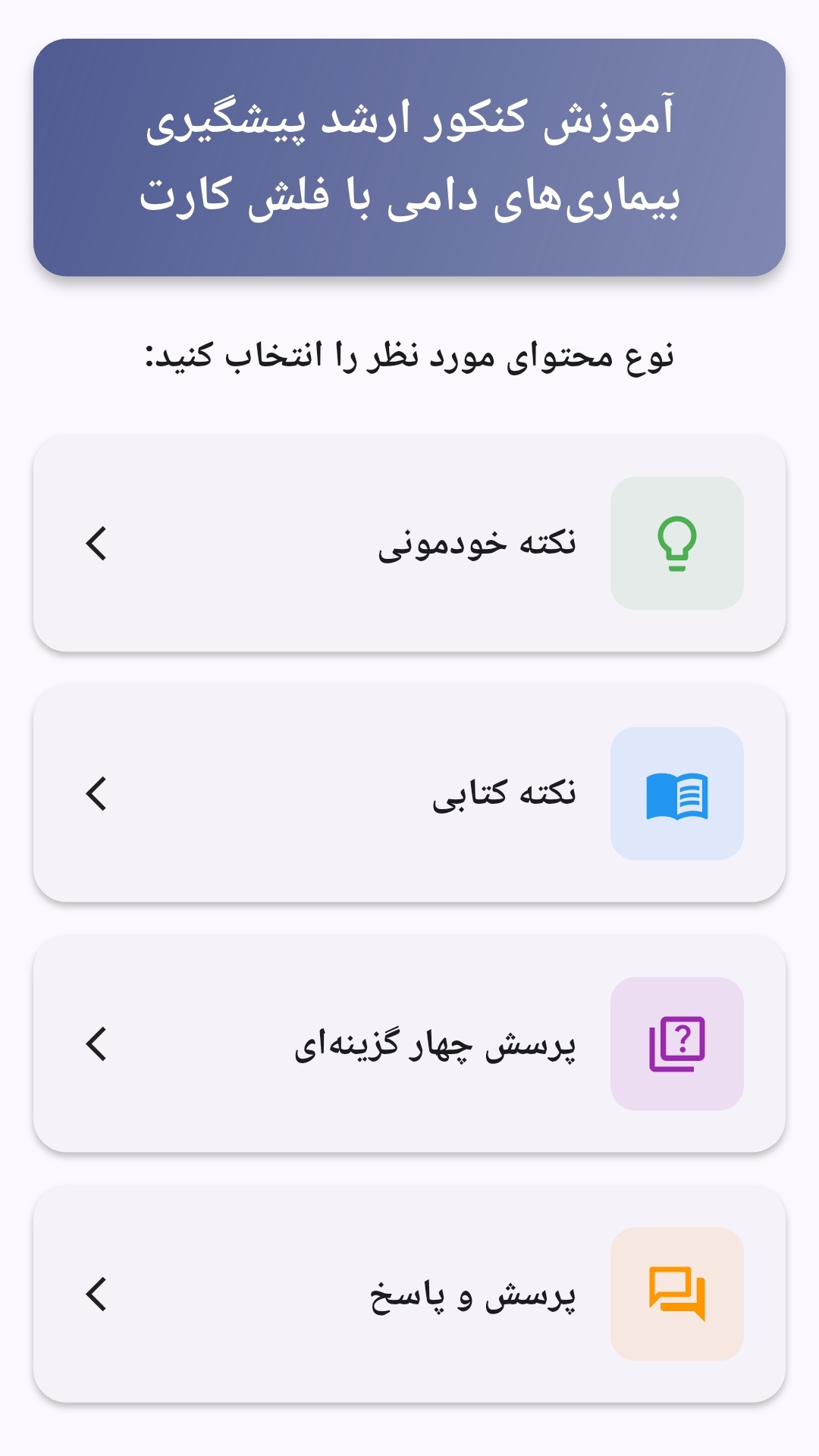
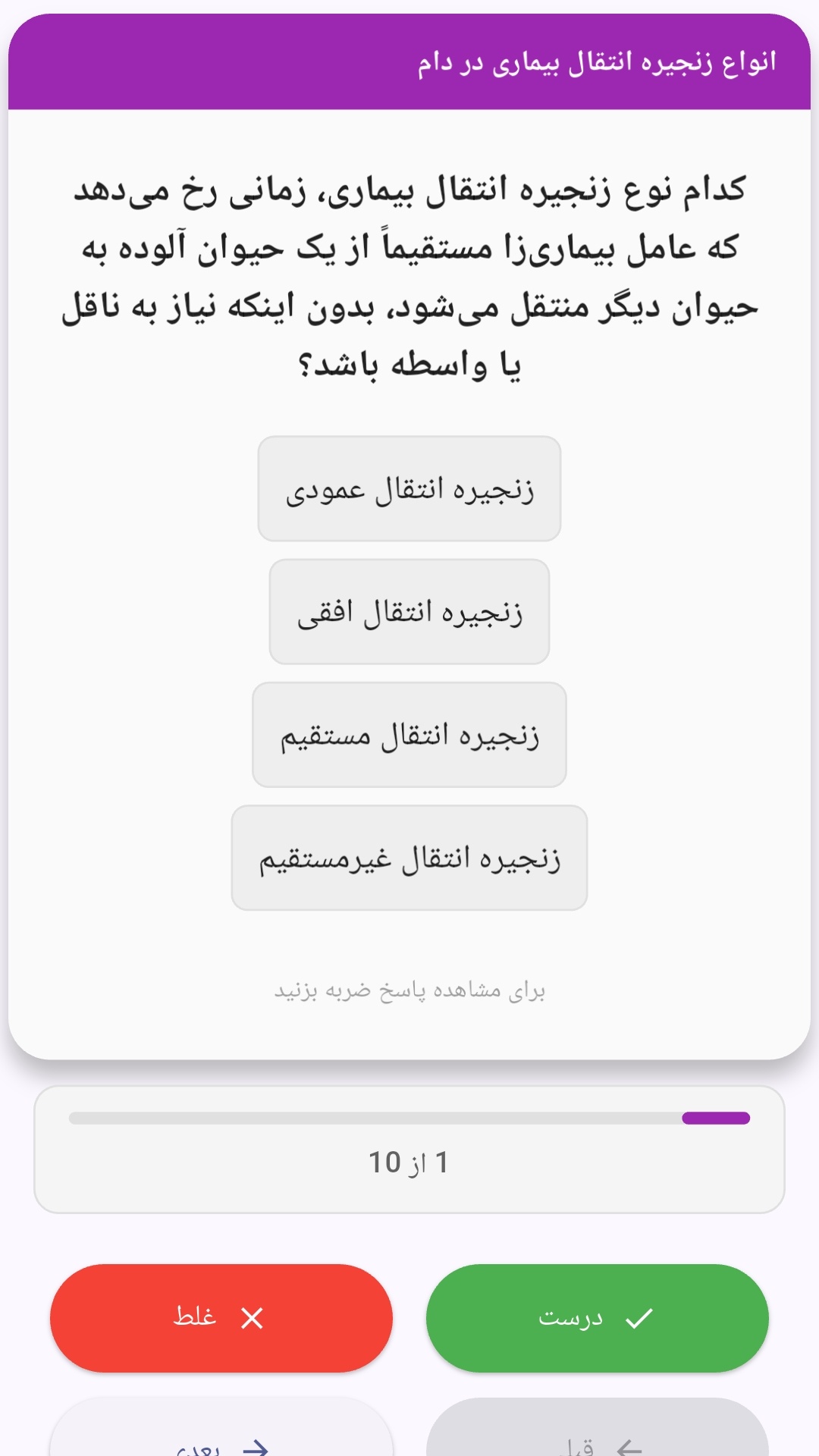
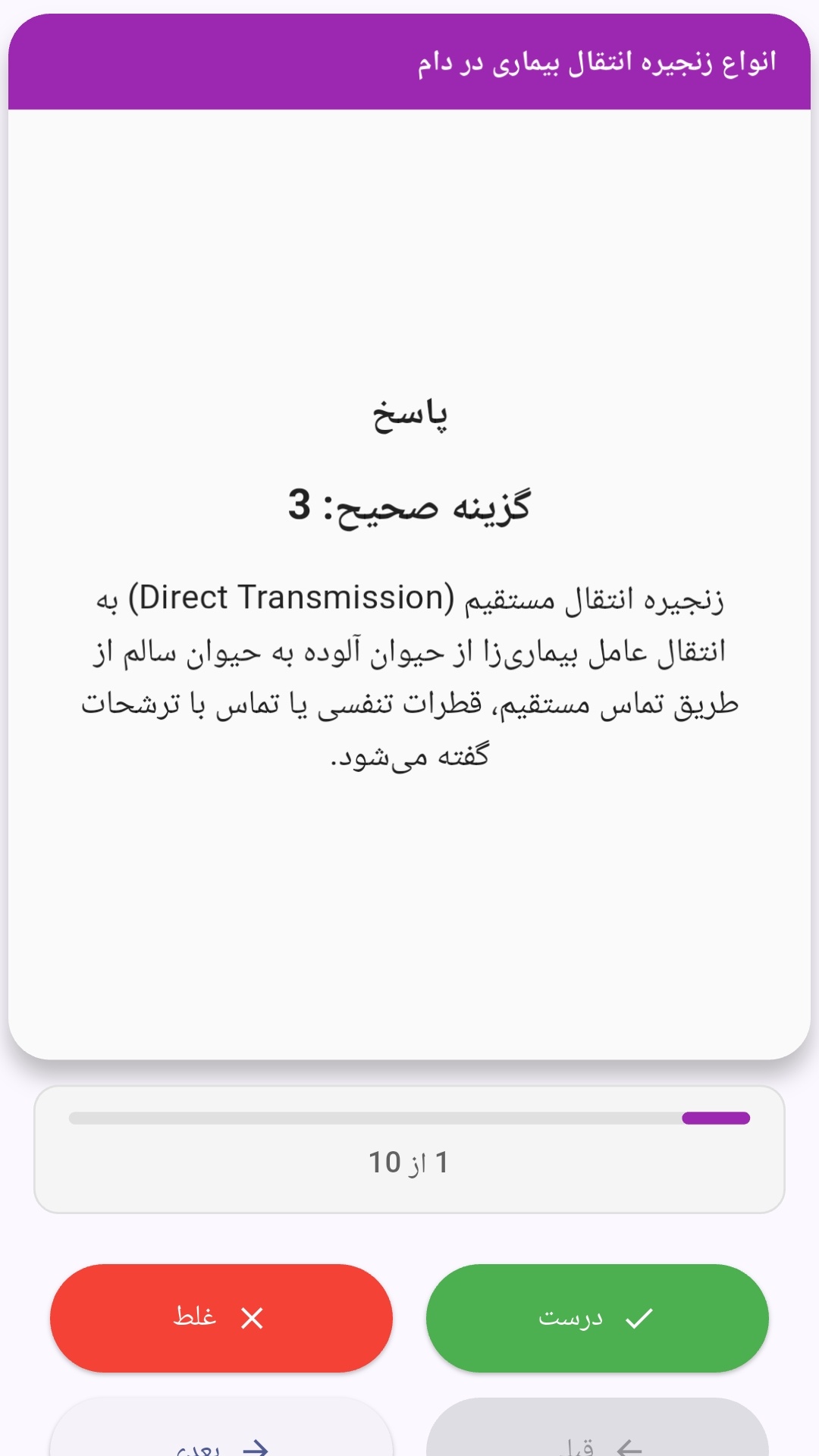
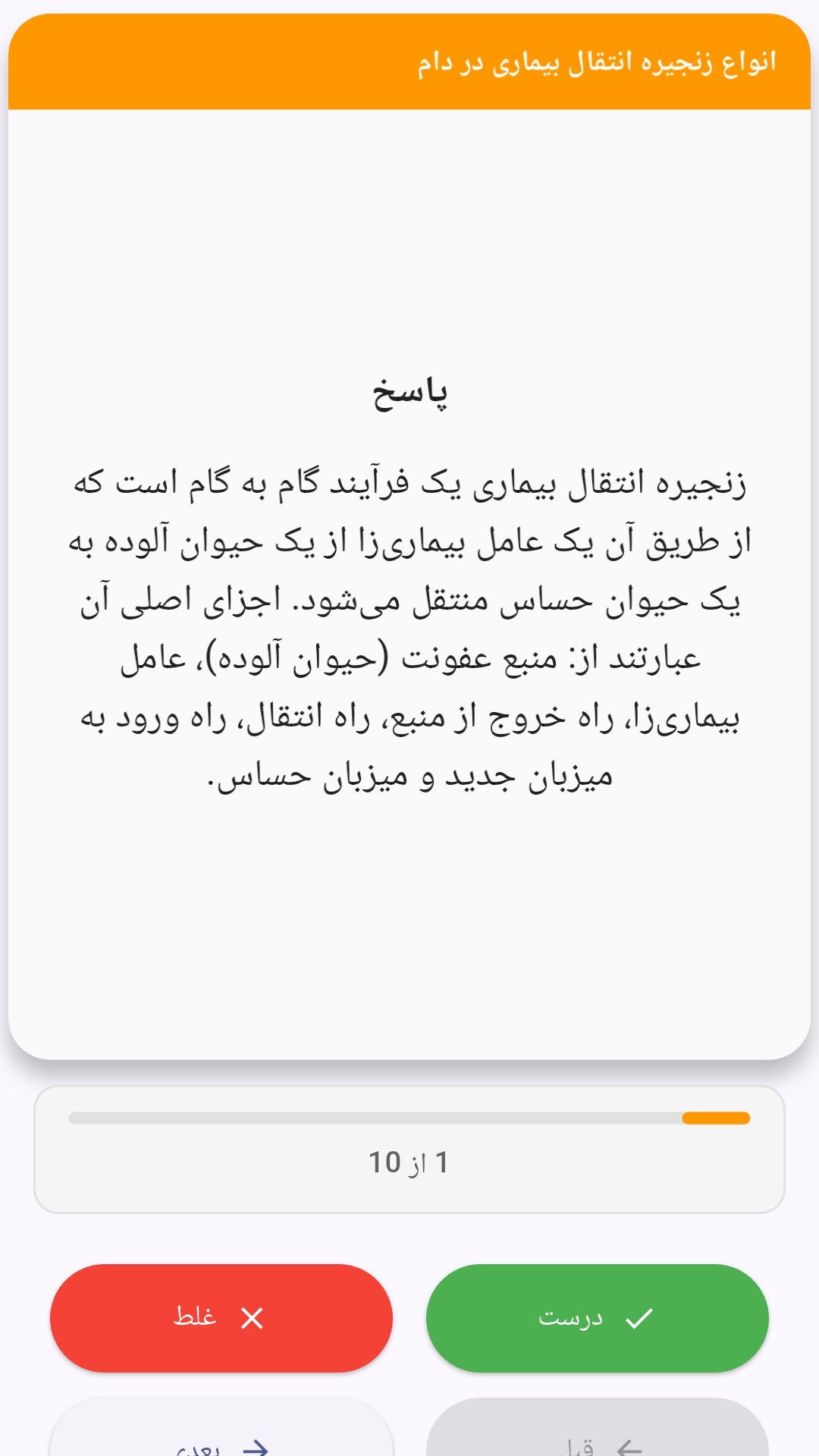
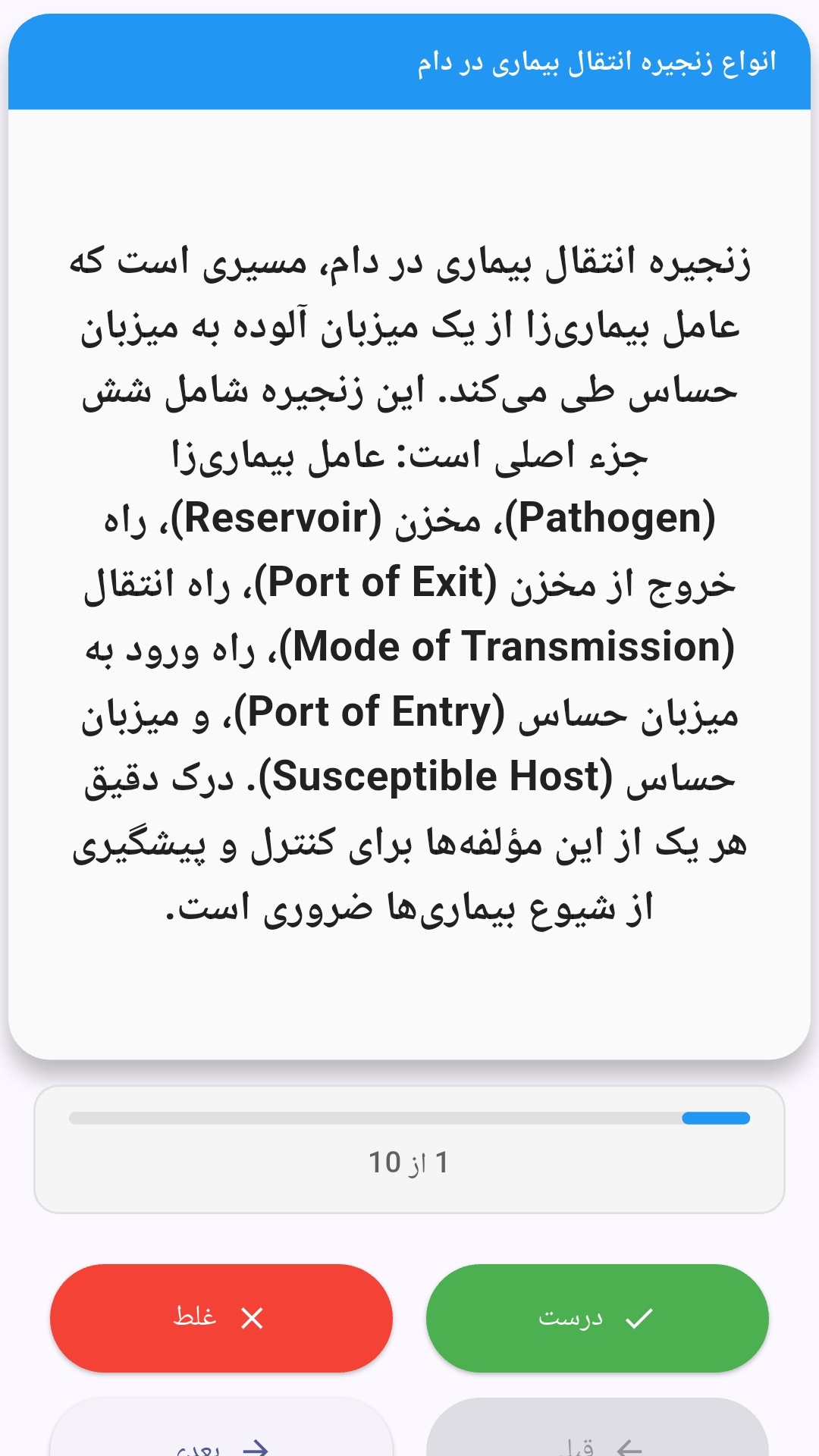
این اپلیکیشن فارسی برای یادگیری و مرور محتوای آموزشی از طریق فلشکارت طراحی شده است. کارتها را یکییکی مرور کنید، پاسخ پرسشها را به یاد بیاورید و نتیجه هر پاسخ را ثبت کنید. محتوای دوره پس از نصب درون برنامه در دسترس است تا برای مطالعه روزمره معمولاً به اتصال مداوم اینترنت نیاز نداشته باشید.
محتوای آموزشی در قالبهای متنوع ارائه میشود تا هم برای یادگیری مفاهیم جدید و هم برای تثبیت آموختهها قابل استفاده باشد.
- رابط کاربری فارسی و راستچین با فونت وزیر.
- تم روشن و تیره مطابق تنظیمات سیستم.
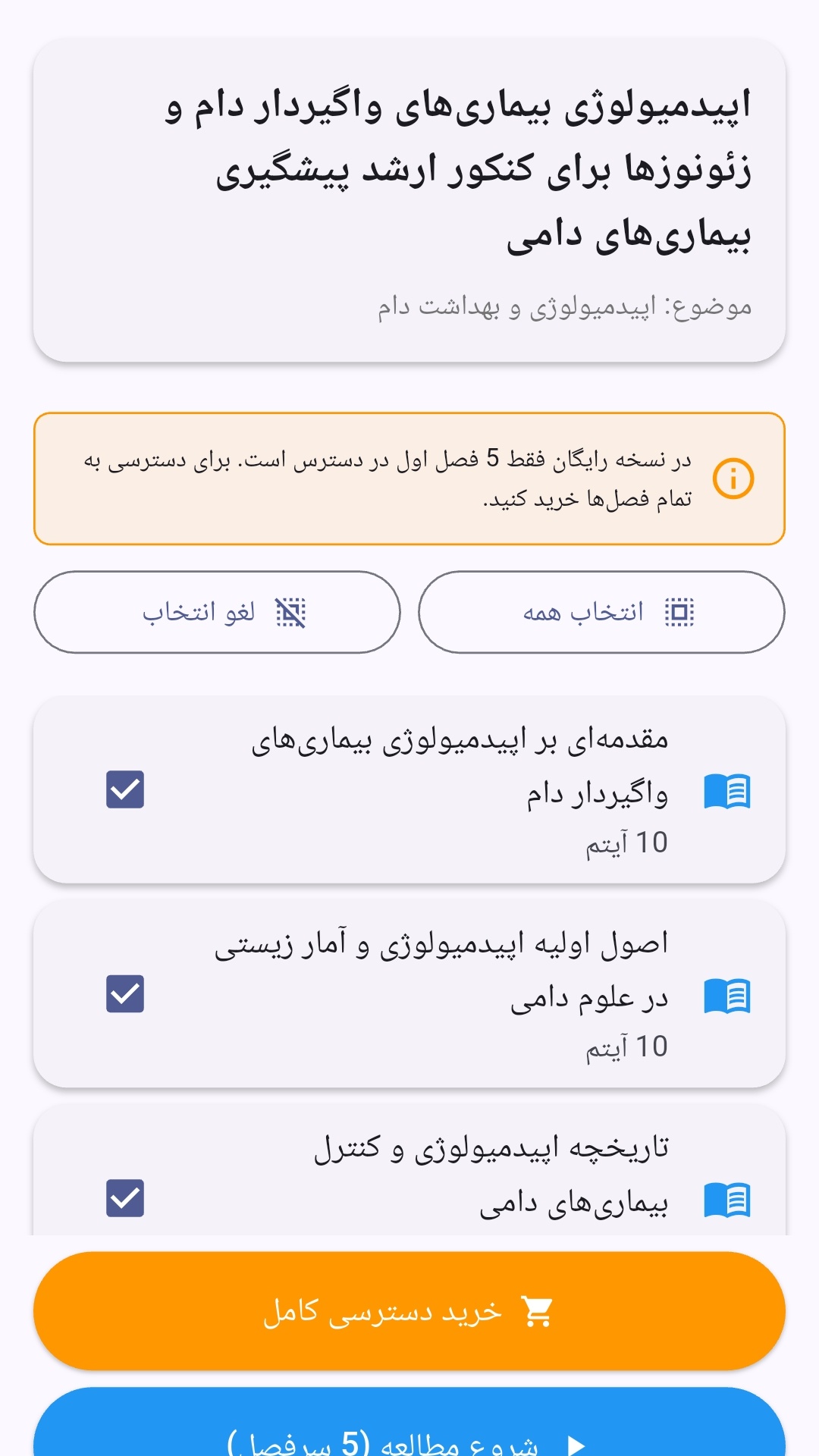
- صفحهبندی ساده برای انتخاب دوره و شروع مرور.
- نمایش تعداد دفعات مرور هر فصل.
- انتخاب چند فصل برای مرور همزمان.
- امکان تمرکز بر فصلهایی که هنوز مرور نشدهاند.
این اپلیکیشن برای دانشآموزان، دانشجویان، داوطلبان آزمونها و علاقهمندان به یادگیری طراحی شده است؛ بهویژه کسانی که میخواهند مطالب آموزشی را در زمانهای کوتاه مرور کنند، دانستههای خود را بسنجند و مطالعه منظمتری داشته باشند.



نظرات
هنوز نظری ثبت نشده است.
وارد شوید تا نظر ثبت کنید.