
اپلیکیشن اندرویدی فلشکارت آموزشی زبان انگلیسی برای مهندسان در درک و تحلیل الگوریتمهای یادگیری توزیع شده
🎓 دوره آموزشی جامع
📚 اطلاعات دوره
عنوان دوره: دوره زبان انگلیسی برای مهندسان در درک و تحلیل الگوریتمهای یادگیری توزیع شده
موضوع کلی: آموزش زبانهای خارجی
موضوع میانی: زبان در حوزه مهندسی
📋 سرفصلهای دوره
- 1. Introduction to Technical English for Engineers
- 2. Key Vocabulary for Engineering Concepts
- 3. Understanding Scientific Paper Structure
- 4. Skimming and Scanning Technical Texts for Main Ideas
- 5. Analyzing Sentence Structures in Engineering Documents
- 6. Grasping Grammatical Tenses in Technical Descriptions
- 7. Using Passive Voice for Objectivity in Engineering
- 8. Interpreting Data from Charts, Graphs, and Tables
- 9. Defining Technical Terms: Formal and Operational Definitions
- 10. Summarizing Complex Technical Paragraphs
- 11. Reading Comprehension Strategies for Algorithms
- 12. Understanding Connectors and Discourse Markers in Technical Arguments
- 13. Identifying Cause-Effect Relationships in Engineering Explanations
- 14. Explaining Processes and Procedures Clearly
- 15. Avoiding Ambiguity in Technical Communication
- 16. Introduction to Machine Learning: Paradigms and Applications
- 17. Key Terminology in Machine Learning: Features, Labels, Models
- 18. Supervised Learning: Regression and Classification Overview
- 19. Unsupervised Learning: Clustering and Dimensionality Reduction
- 20. Reinforcement Learning: Agents, Environments, and Rewards
- 21. Understanding Basic ML Algorithms: Linear Regression
- 22. Analyzing Decision Trees and Random Forests
- 23. Neural Networks: Perceptrons to Deep Learning Basics
- 24. Evaluating Machine Learning Models: Metrics Introduction
- 25. Bias and Variance Trade-off in Model Development
- 26. Overfitting and Underfitting: Identification and Mitigation
- 27. Cross-Validation Techniques for Model Robustness
- 28. Feature Engineering: Principles and Importance
- 29. Data Preprocessing: Cleaning, Transformation, and Scaling
- 30. Introduction to Model Interpretability
- 31. Introduction to Distributed Computing Systems
- 32. Core Concepts: Concurrency, Parallelism, and Distribution
- 33. Understanding Network Topologies and Protocols
- 34. Client-Server vs. Peer-to-Peer Architectures
- 35. Data Consistency Models in Distributed Systems
- 36. Fault Tolerance and High Availability Principles
- 37. Distributed Consensus Mechanisms: Overview
- 38. Inter-Process Communication in Distributed Environments
- 39. Concepts of Scalability and Performance in Distributed Systems
- 40. Understanding Latency, Throughput, and Bandwidth
- 41. Distributed Storage Systems: HDFS Basics
- 42. Message Queues and Event Streaming: Kafka Introduction
- 43. Virtualization and Containerization in Distributed Deployments
- 44. Cloud Computing Paradigms: IaaS, PaaS, SaaS
- 45. Security Considerations in Distributed Systems
- 46. Introduction to Distributed Machine Learning: Motivations and Challenges
- 47. Why Distribute ML Workloads? Handling Big Data and Complex Models
- 48. Key Challenges in Distributed ML: Communication Overhead and Synchronization
- 49. Data Parallelism: Distributing Data for Training
- 50. Model Parallelism: Splitting Models Across Devices
- 51. Understanding Parameter Server Architecture
- 52. Synchronous Gradient Descent in Distributed Settings
- 53. Asynchronous Gradient Descent: Advantages and Pitfalls
- 54. Gradient Aggregation Techniques: Sum, Average, All-Reduce
- 55. Communication Strategies in Distributed ML Training
- 56. Batching and Mini-Batching in Distributed Contexts
- 57. Optimizers for Distributed Learning: SGD, Adam in Parallel
- 58. Data Sharding and Partitioning Strategies for ML Datasets
- 59. Worker-Client Communication Patterns
- 60. Role of the Master/Coordinator Node in Distributed Training
- 61. Monitoring Distributed ML Jobs
- 62. Debugging Distributed ML Algorithms
- 63. Handling Stragglers and Faults in Distributed Training
- 64. Checkpointing and Recovery in Distributed ML
- 65. Understanding Data Skew in Distributed Learning
- 66. Model Averaging Techniques for Ensemble Learning
- 67. Decentralized Learning Architectures
- 68. Horovod: Distributed Deep Learning Framework Overview
- 69. PyTorch Distributed Data Parallel (DDP) Basics
- 70. TensorFlow Distributed Strategy API Introduction
- 71. Advanced Data Parallelism: Gradient Compression Techniques
- 72. Advanced Model Parallelism: Pipeline Parallelism and Sharding
- 73. Federated Learning: Principles, Privacy, and Use Cases
- 74. Understanding Homomorphic Encryption in Federated Learning
- 75. Differential Privacy in Distributed Learning
- 76. Graph Neural Networks (GNNs) in Distributed Environments
- 77. Distributed Reinforcement Learning: Actor-Critic Architectures
- 78. Multi-Agent Reinforcement Learning in Distributed Settings
- 79. Online Learning and Streaming Data in Distributed Systems
- 80. Interpreting Convergence Criteria for Distributed Algorithms
- 81. Analyzing Scalability of Distributed ML Algorithms
- 82. Performance Benchmarking of Distributed Learning Systems
- 83. Profiling Communication and Computation Bottlenecks
- 84. Optimizing Network Throughput for Distributed Training
- 85. Resource Allocation for Distributed ML Workloads
- 86. Introduction to Ray for Distributed AI and Python
- 87. Building Distributed Training Pipelines with Kubeflow
- 88. Understanding Apache Spark for Distributed ML (MLlib)
- 89. Distributed Hyperparameter Optimization Strategies
- 90. Analyzing the Impact of Network Latency on Distributed Learning
- 91. Edge Computing and Distributed ML for IoT Devices
- 92. Swarm Intelligence and Distributed Optimization
- 93. Ethical Considerations in Large-Scale Distributed AI Systems
- 94. Robustness of Distributed Learning to Data Poisoning
- 95. Understanding Byzantine Fault Tolerance in Distributed ML
- 96. Emerging Architectures for Distributed Deep Learning
- 97. Research Trends in Distributed Machine Learning
- 98. Case Studies: Large-Scale Distributed ML Deployments
- 99. Future Directions in Distributed AI Algorithms
- 100. Project: Analyzing a Distributed Learning Algorithm Paper
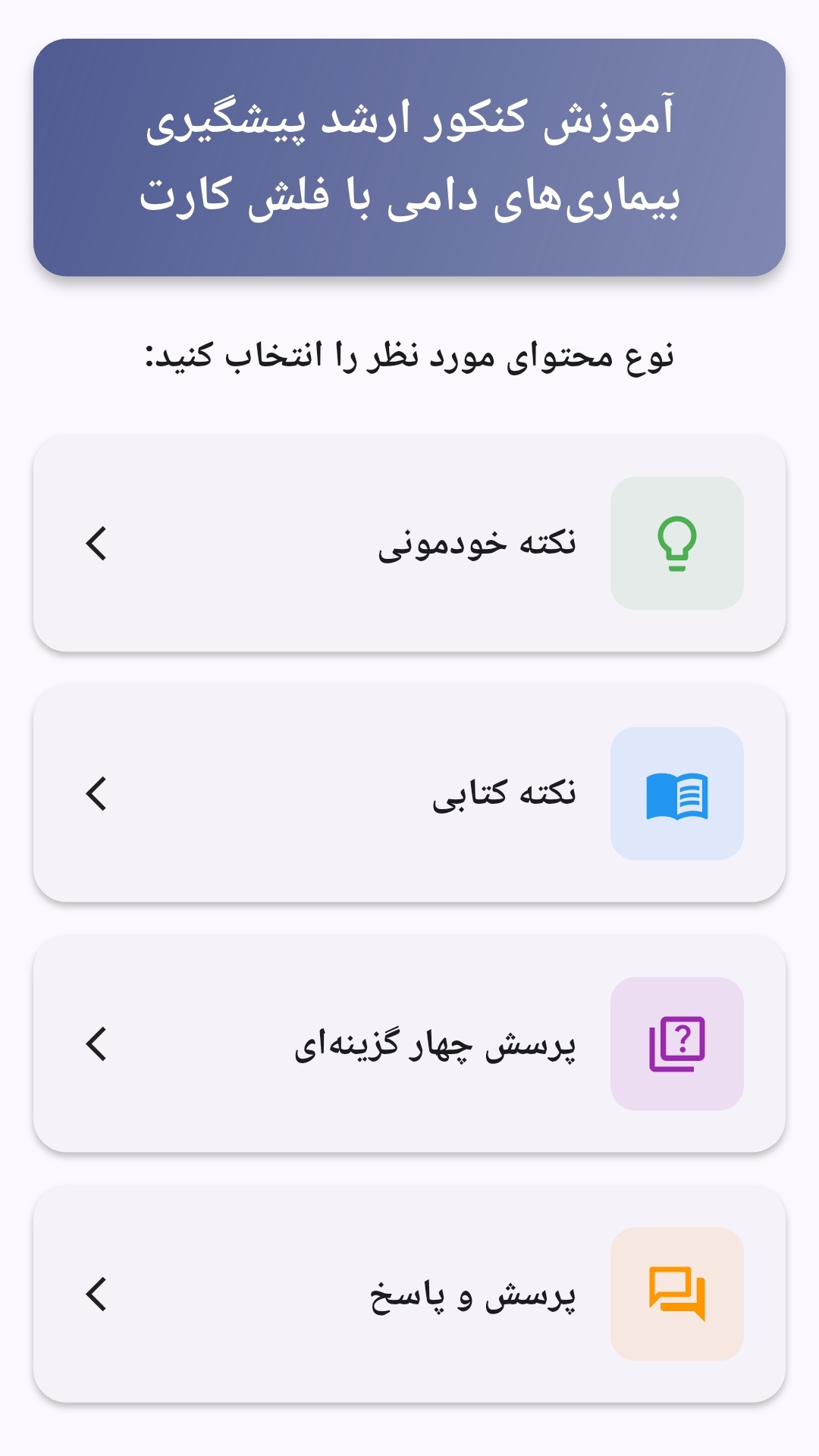
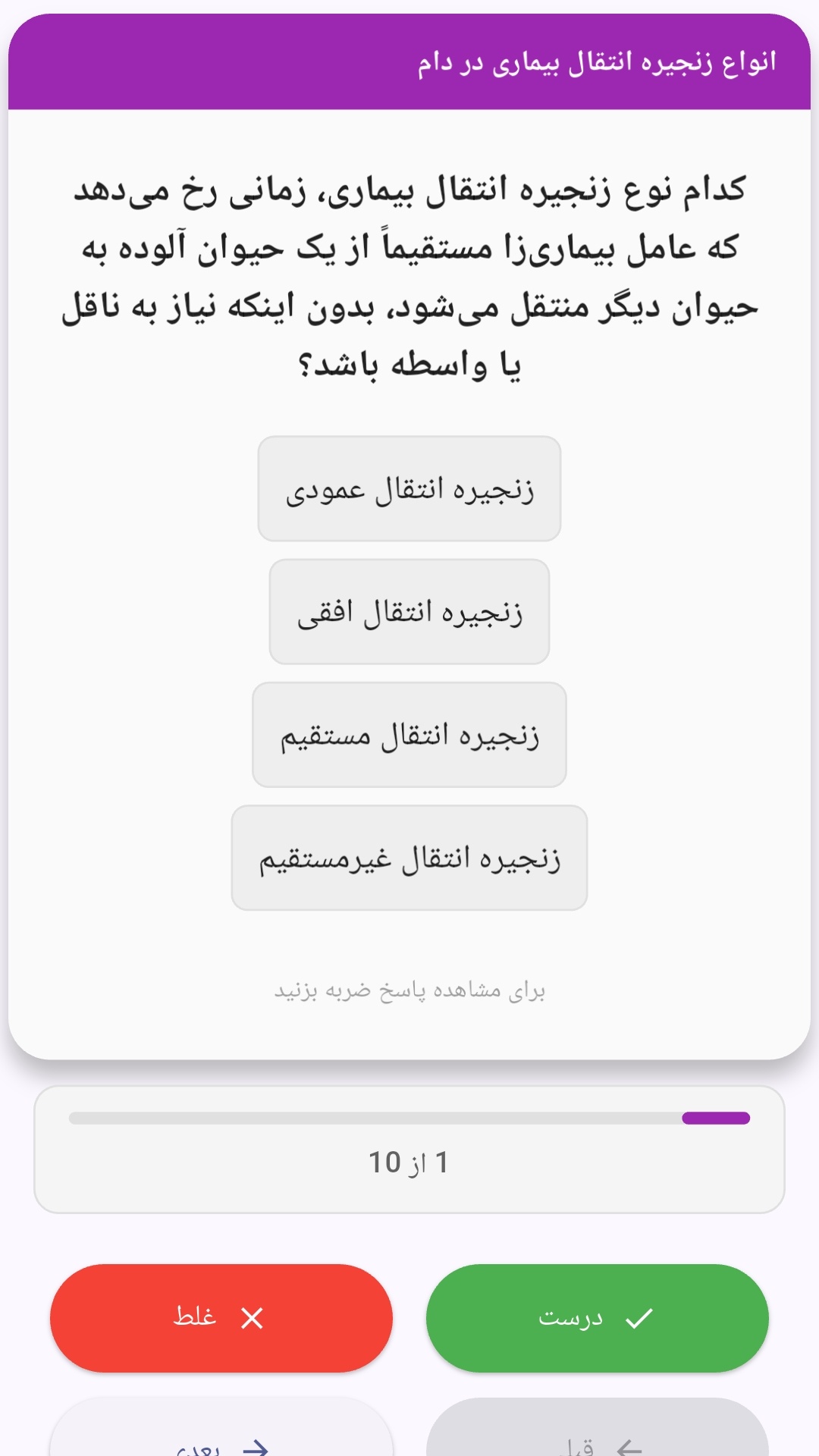
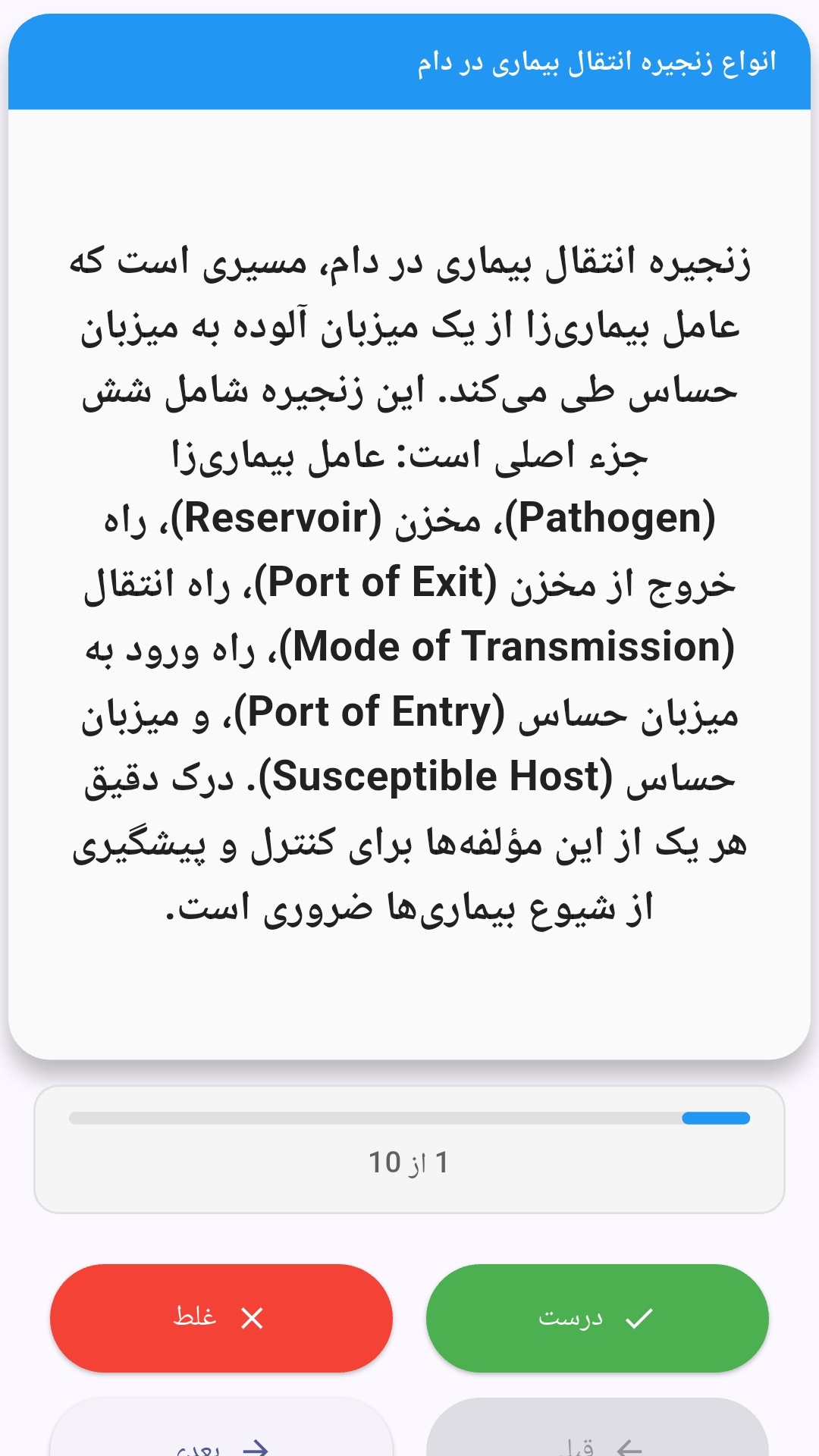
این اپلیکیشن فارسی برای یادگیری و مرور محتوای آموزشی از طریق فلشکارت طراحی شده است. کارتها را یکییکی مرور کنید، پاسخ پرسشها را به یاد بیاورید و نتیجه هر پاسخ را ثبت کنید. محتوای دوره پس از نصب درون برنامه در دسترس است تا برای مطالعه روزمره معمولاً به اتصال مداوم اینترنت نیاز نداشته باشید.
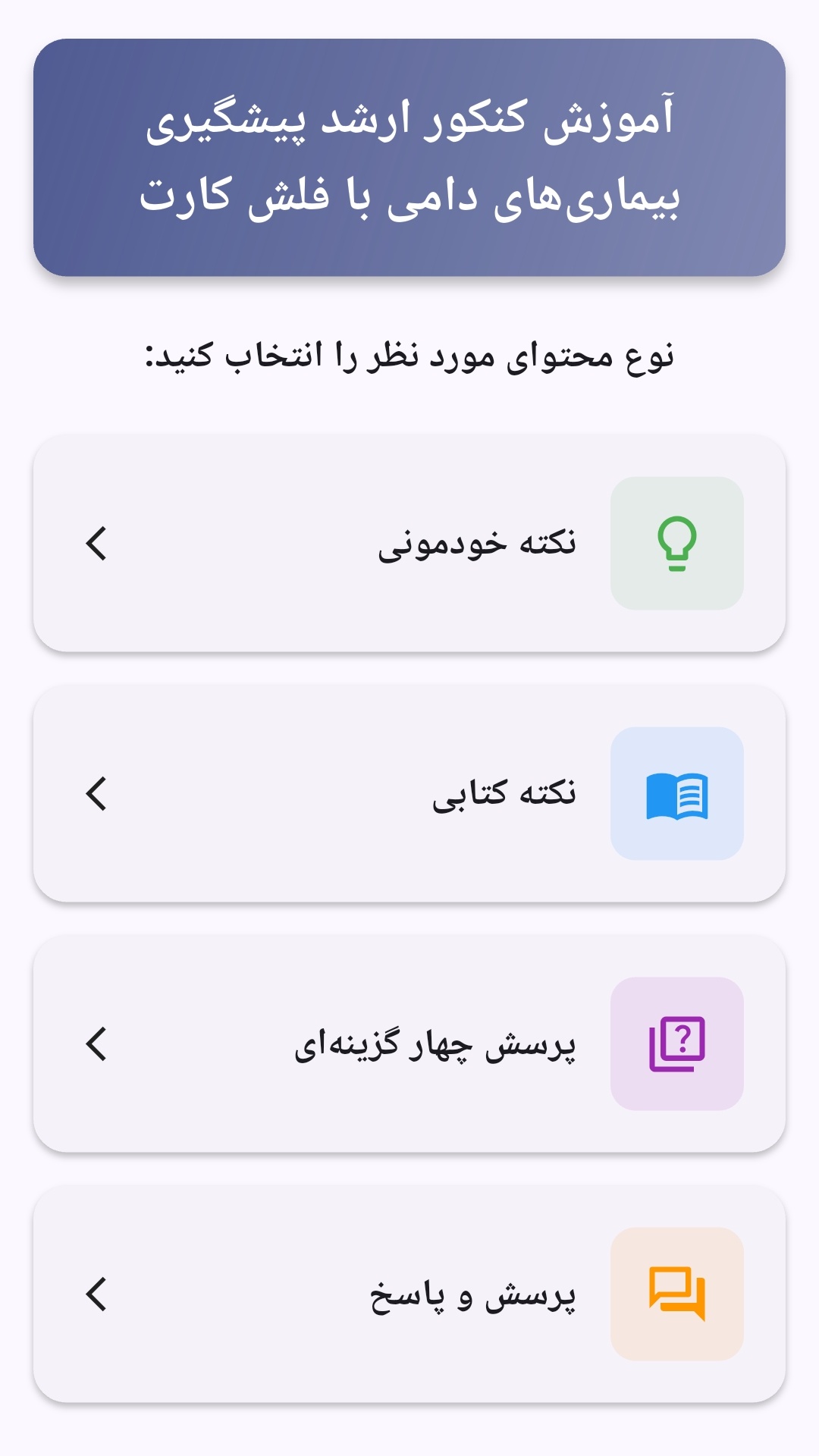
محتوای آموزشی در قالبهای متنوع ارائه میشود تا هم برای یادگیری مفاهیم جدید و هم برای تثبیت آموختهها قابل استفاده باشد.
- رابط کاربری فارسی و راستچین با فونت وزیر.
- تم روشن و تیره مطابق تنظیمات سیستم.
- صفحهبندی ساده برای انتخاب دوره و شروع مرور.
- نمایش تعداد دفعات مرور هر فصل.
- انتخاب چند فصل برای مرور همزمان.
- امکان تمرکز بر فصلهایی که هنوز مرور نشدهاند.
این اپلیکیشن برای دانشآموزان، دانشجویان، داوطلبان آزمونها و علاقهمندان به یادگیری طراحی شده است؛ بهویژه کسانی که میخواهند مطالب آموزشی را در زمانهای کوتاه مرور کنند، دانستههای خود را بسنجند و مطالعه منظمتری داشته باشند.







نظرات
هنوز نظری ثبت نشده است.
وارد شوید تا نظر ثبت کنید.